



The Spice People
Your passport to cook the world.
View case study





As volumes, products and customers grow, small gaps between purchasing, production, inventory, quality and fulfilment become expensive. Supply’d connects those workflows, helping your team reduce manual work, protect traceability and operate with greater control.

Supply’d ERP connects every stage of food manufacturing, from demand planning and ingredient purchasing through production, warehouse fulfilment and delivery. Inventory updates as work happens, batches remain traceable, and each result improves the next production and purchasing decision.


Supply’d ERP connects the production floor with the rest of the business. Sales demand informs production, production consumes real batches, inventory updates automatically, and every finished item remains traceable through to the customer.


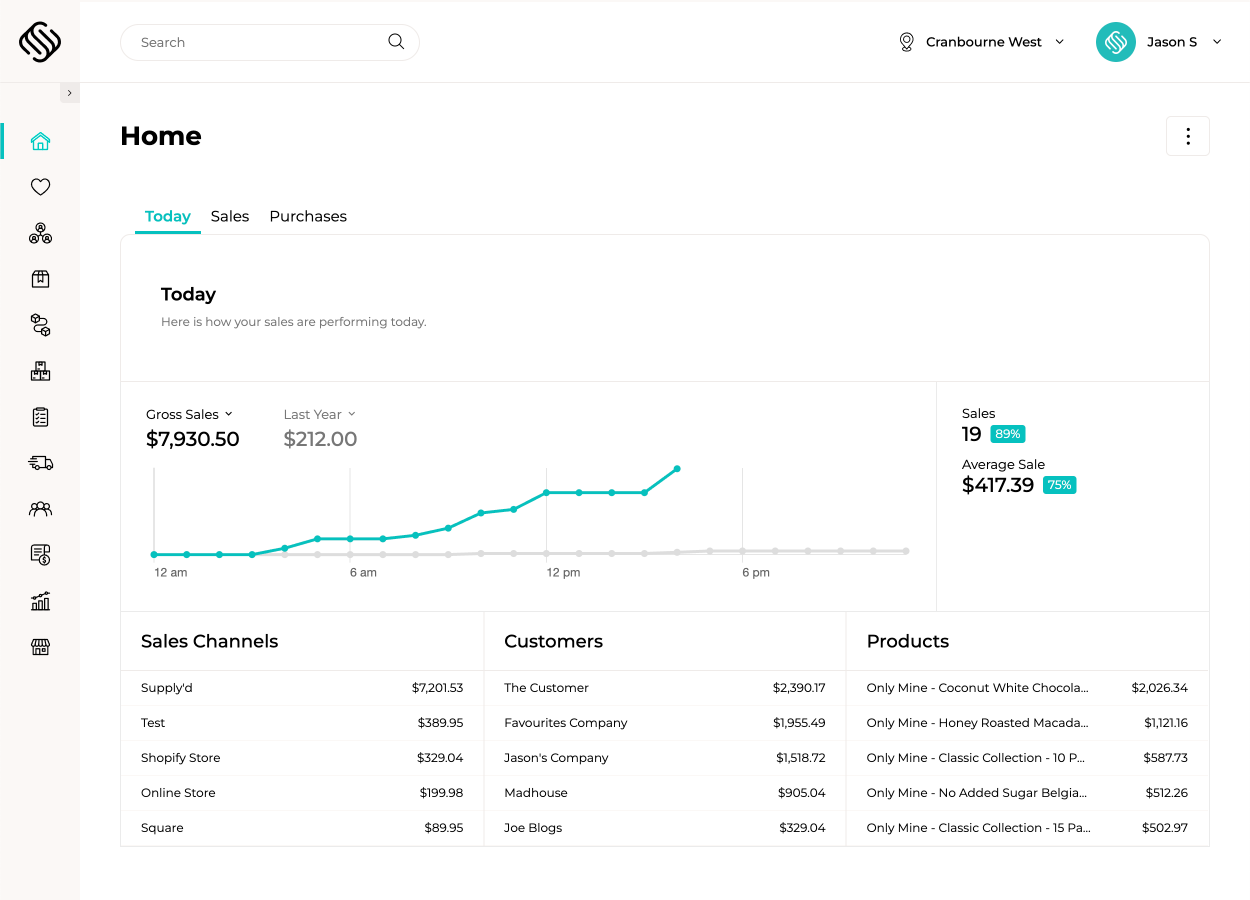
Supply’d ERP brings planning, production, inventory, quality and fulfilment into one connected platform, giving every team the information and workflows they need to keep production moving, maintain traceability and protect margin.

Turn orders and forecasts into practical production plans. Supply’d calculates material requirements, coordinates multi-stage production and guides teams through each batch while capturing labour, yield and actual usage as work happens.
Explore Production Management| NUTRITIONAL INFORMATION | ||
Manage recipes, ingredients, allergens, specifications, pack formats, labels and expected yields from one central product record. Approved information flows through purchasing, production, quality and sales, helping your team maintain consistency and support HACCP, SQF and customer-specific food-safety requirements.
Explore Product ManagementBring wholesale, ecommerce, EDI, standing orders and manually entered orders into one connected demand view. Customer demand flows through production planning, purchasing and fulfilment without teams rebuilding requirements across spreadsheets and disconnected systems.
Explore Sales Order ManagementTurn production requirements, current stock, supplier lead times, minimums and ordering rules into practical purchasing recommendations. Supply’d helps prevent shortages without tying up unnecessary cash in ingredients and packaging.
Explore Purchase Management
Coordinate receiving, replenishment, picking, packing and delivery while maintaining batch and expiry information. Warehouse teams can work with scanners and live instructions while inventory updates as each task is completed.
Explore Warehouse Management

Use Supply’d Intelligence to optimise delivery routes around orders, vehicles and customer requirements. Drivers can complete runs on a Supply’d PDA scanner, follow their delivery sequence and capture digital proof of delivery at each stop.
Explore Delivery ManagementSee what each product truly costs to make. Supply’d separates material, labour and overhead costs, compares expected and actual yield, and shows where waste, substitutions and production variance are affecting margin.
Explore Business IntelligenceRecord receiving, production and finished-goods checks against the relevant product, batch or production run. Assign recurring quality tasks and maintain role-based training records so standards are followed consistently across the team.
Explore Quality Management

Supply’d Intelligence turns operational data into action. It forecasts demand, recommends purchasing, plans production, reads incoming orders and invoices, and optimises delivery, all within the workflows your team already uses.
Explore Supply'd Intelligence
Supply’d works where the operation happens. Connect PDA scanners, production tablets, scales, label printers and mobile devices to guide receiving, weigh-up, production, stock control, picking, packing and delivery.

Implementation is tailored to the size and complexity of your operation. Choose structured remote onboarding or deeper planning, data support, onsite training and go-live assistance through our Discovery & Implementation Program.
Explore ImplementationKeep the accounting system your finance team already knows. Supply’d ERP runs purchasing, production, inventory, orders and fulfilment, then sends supported financial data to Xero or MYOB without forcing your operation into an accounting-led workflow.











Supply’d combines food manufacturing depth with the broader operational capabilities growing businesses need. Purchasing, production, traceability, inventory, warehouse, delivery and reporting work together in one connected platform, supported by practical implementation and hardware-ready workflows.

Book a personalised demo based on your products, workflows, systems and growth plans.
Book a demoYes. Supply’d supports multi-stage production with sub-recipes and intermediate products. A sauce, filling, dough or base can be produced as its own batch and then consumed in another finished product. Ingredient costs, allergens, nutrition and batch traceability remain connected throughout the process.
Yes. Supply’d combines customer orders, standing orders, forecasts, current inventory, shelf life and recipe requirements to recommend what needs to be produced. Production teams can then work from a clear schedule rather than manually rebuilding plans in spreadsheets each day.
Yes. Smart Purchasing considers planned production, sales demand, current stock, minimum stock levels, supplier lead times, order multiples and purchasing rules to recommend what should be ordered. Your team remains in control of reviewing and approving purchase orders before they are sent.
Yes. Ingredients can be purchased, stored, produced and sold in different units. For example, flour can be purchased in 25kg bags, consumed in grams during production and included in finished products sold by the unit, carton or weight.
Supply’d records supplier batches and expiry dates during receiving, tracks which batches are consumed during production and connects finished-product batches to the customers who received them. This provides traceability from supplier through production and fulfilment without piecing records together manually.
Yes. Enter an ingredient or finished-product batch number to trace where it came from, where it was used and which customers received affected products. Recall reports can be produced quickly for internal reviews, customer enquiries and audit preparation.
Yes. Digital checks and recurring tasks can be built into production and operational workflows. Staff can record information such as temperatures, pH readings, cleaning checks, metal detection results and corrective actions, creating a permanent time-stamped record for your quality and food-safety program.
Yes. Supply’d can guide production staff through ingredient weigh-up and production breakdowns, including connected scale workflows through supported Wedderburn equipment. This helps reduce weighing errors, standardise production and capture actual usage more accurately.
Yes. Approved ingredient substitutions can be used during production, with recipe quantities recalculated where required. Supply’d can also update the resulting allergen and nutritional information so the finished batch reflects what was actually produced.
Yes. Supply’d records expected recipe yield alongside the quantity actually produced. This helps identify production variance, waste, overuse and process inconsistency, while giving your team a clearer view of how yield affects product cost and margin.
Yes. Supply’d can separate material, labour and overhead costs and apply them to production. Combined with actual ingredient usage and yield, this gives you a more accurate understanding of what each product costs to make and where margin is being lost.
Yes. Supply’d tracks batch and expiry information and can guide warehouse teams to use stock according to first-expired, first-out rules. This improves stock rotation, reduces avoidable waste and strengthens batch control across receiving, production and fulfilment.
Yes. Supply’d supports scanner-based receiving, stocktakes, guided picking, wave picking, packing and batch selection. Warehouse teams can work from live instructions rather than printed pick slips, while inventory updates as work is completed.
Yes. Customers can use Supply’d Lite to place orders using their own products, pricing and ordering rules. Orders flow directly into Supply’d ERP, reducing email, phone orders and manual entry for your sales team.
Supply’d is designed to run the operational side of the business, including purchasing, production, inventory, orders, fulfilment and delivery. Financial information can then be sent to supported accounting platforms such as Xero and MYOB, allowing your finance team to retain its existing accounting workflow.
Yes. Supply’d integrates with platforms including Shopify, WooCommerce, Square, Shippit, Starshipit and supported EDI and API services. This allows orders and fulfilment information to move through the operation without relying on repeated manual entry.
Yes. Supply’d supports multiple locations, departments, warehouses, production areas and user permissions within one connected platform. This gives growing manufacturers central visibility while allowing each team or location to manage the work relevant to them.
Implementation is tailored to the complexity of your operation and can include discovery, workflow design, data migration, configuration, hardware setup, integrations and staff training. The aim is not simply to install software, but to establish practical workflows your team can use every day.